

Chinese speaking practice routine: 20 minutes a day
Build a practical Chinese speaking practice routine with 20-minute daily sessions for pronunciation, tone control, AI conversation, and review.
Elo Chinese learning blog
Useful sentences, clearer pronunciation and practice you can repeat. Find a guide for the conversation you want to handle, or compare ways to make speaking part of your day.

Build a practical Chinese speaking practice routine with 20-minute daily sessions for pronunciation, tone control, AI conversation, and review.

Learn how to check Mandarin pronunciation online with pinyin, tones, recordings, sentence practice, and human feedback.
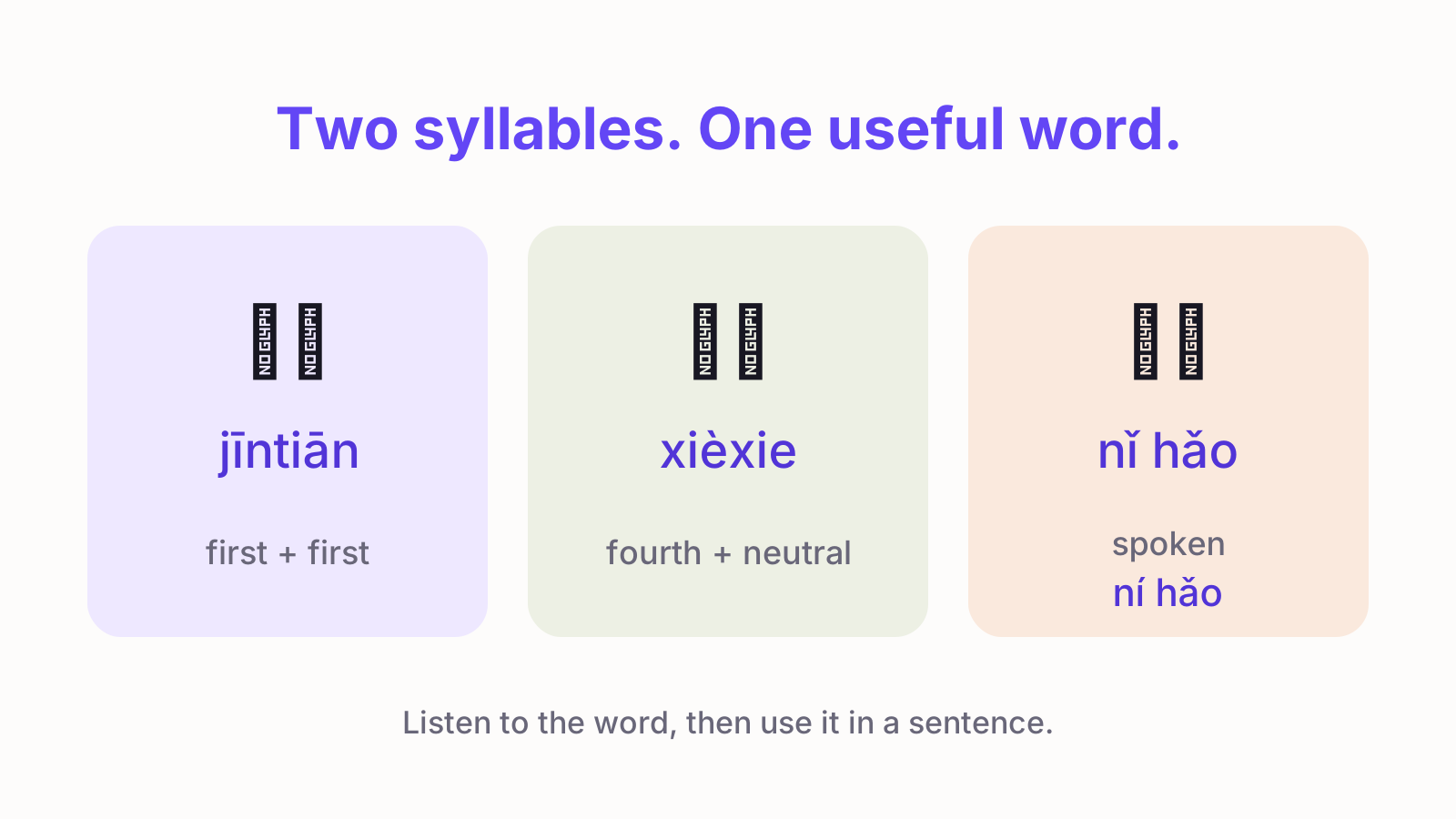
Practise Mandarin tone pairs with accurate pinyin, third-tone sandhi and neutral-tone examples. Move from a useful word pair into a complete sentence.

Learn why Mandarin third tones change in connected speech. Practise half third tones, third-tone sandhi and neutral syllables in one useful sentence.

Understand what a free Chinese speaking assessment can measure, what it cannot prove, and how to use Elo's 15-second reference-sentence check responsibly.
Choose a Chinese speaking app by your goal: pronunciation, daily conversation, vocabulary or human feedback. Use a practical checklist instead of a ranking.

Compare AI Chinese tutors and human Chinese tutors for speaking practice, including frequency, feedback, nuance, cost, and confidence.

Prepare for the HSKK oral exam with a practical study plan for speaking practice, recording, pronunciation, fluency, and live feedback.
Understand the name, nationality and sequence-number questions before HSKK. Separate exam instructions from general Chinese self-introduction practice.
Browse by learning goal
Start here if people understand your words slowly, tones blur together, or you need a short check before a longer speaking session.
Use these guides to understand official oral-test tasks, prepare spoken answers, and separate opening identity questions from general speaking practice.
Compare daily AI speaking reps, human tutors, language exchanges, and app-based practice before choosing how to spend practice time.
Build a repeatable routine for learners who know what they want to say but need more spoken output, correction, and review.